Женьшеневый чай 人参茶
'Root of life', 1000+ years of use. Wild vs cultivated: 10-fold difference in price and potency. Tonic, with a bittersweet aftertaste.
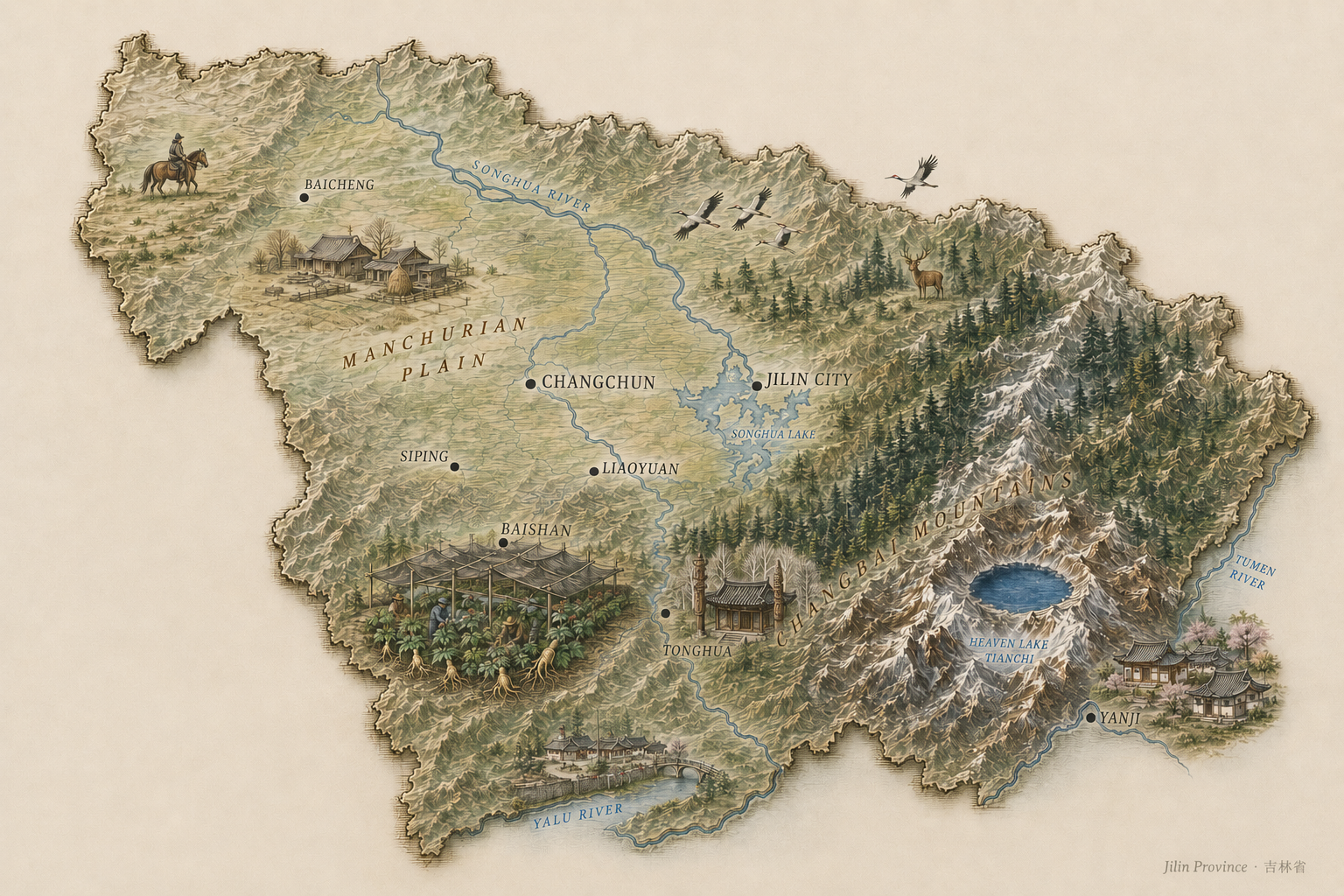
吉林省 · Jílín
At the edge of the world, where snow meets ginseng
天池茶韵
Jilin — a route NOT about camellia, but about the tea culture of the North. Ginseng tea ('root of life'), Korean barley bori-cha, taiga herbal blends. Heaven Lake in the crater of Changbai Mountain and the surreal rime-covered trees along the Songhua River. Here 'tea' means far more than Camellia sinensis.
'Root of life', 1000+ years of use. Wild vs cultivated: 10-fold difference in price and potency. Tonic, with a bittersweet aftertaste.
Korean barley tea — a daily drink in Yanbian. Cool, nutty.
Lingzhi (reishi) mushroom tea. Taiga apothecary: rosehip, peony root, lingzhi.
Korean Tea · Bori-cha
Yanji — the capital of the Korean Autonomous Prefecture. Bori-cha (barley), oksusu-cha (corn silk). Deungulte — a meditative tea ceremony. Korean cuisine: cold noodles, bibimbap, kimchi. 'Little Korea' inside China.
Ondol hotel — heated floor, Korean breakfast
Heaven Lake · Herbal Infusions
Changbai Mountain — 'Eternally White Mountain', 2744 m. Heaven Lake (天池) — a crater lake, one of the most beautiful. Hot springs — boiling eggs. Taiga: birch, cedar, larch. Sacred to Manchu and Koreans. Border with Korea. UNESCO Biosphere Reserve.
Thermal hotel — hot springs in a snowy forest
Ginseng · Taiga Blends
Wild ginseng vs cultivated — a 10-fold difference. Tea from lingzhi, rosehip, peony root — the taiga apothecary. Tasting: ginseng + barley + corn + Korean.
Tonghua Hotel
Rime Ice · Winter Tea Gathering
Rime trees (雾凇) on the Songhua River — a natural wonder, one of China's most surreal landscapes. Hot ginseng tea amid ice crystals. The most photogenic place.
Jilin Hotel
Manchukuo · Finale
Manchukuo Palace — the last emperor, Puyi. Final tasting: all the herbal teas of the route.