Héběi
河北省Imperial Frame · Chengde · The Great Wall in the Sea
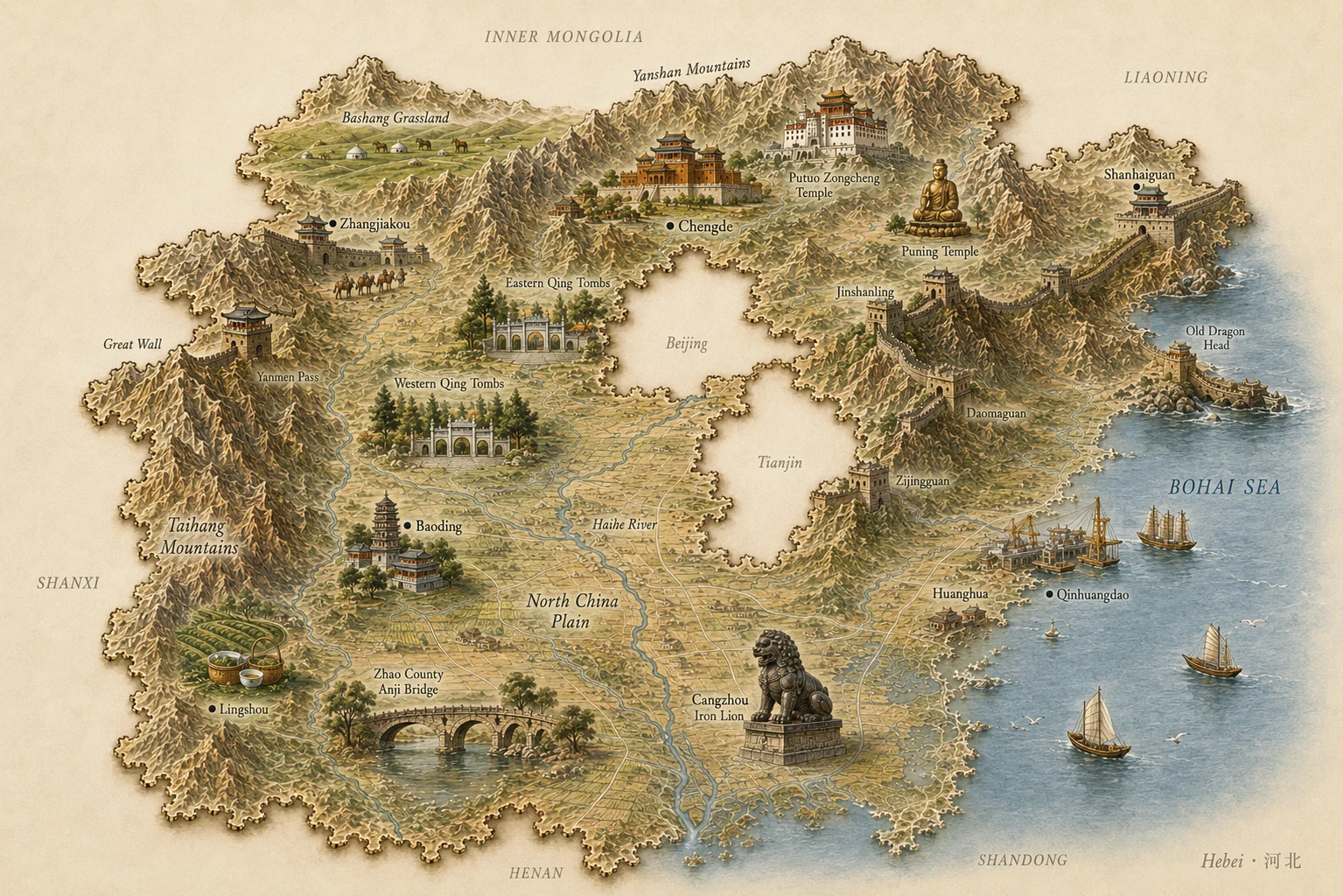
Tea and tea culture
Chéngdé tribute tea 承德贡茶
A theme of tea trade and circulation, not a distinct local tea variety. The encyclopedia catalog distinguishes teas by material and processing.
Suggested route
This is an editorial sequence of stops, not a tour with a fixed timetable. Check distances, transport, access and accommodation before travelling; a stop number does not represent a travel day.
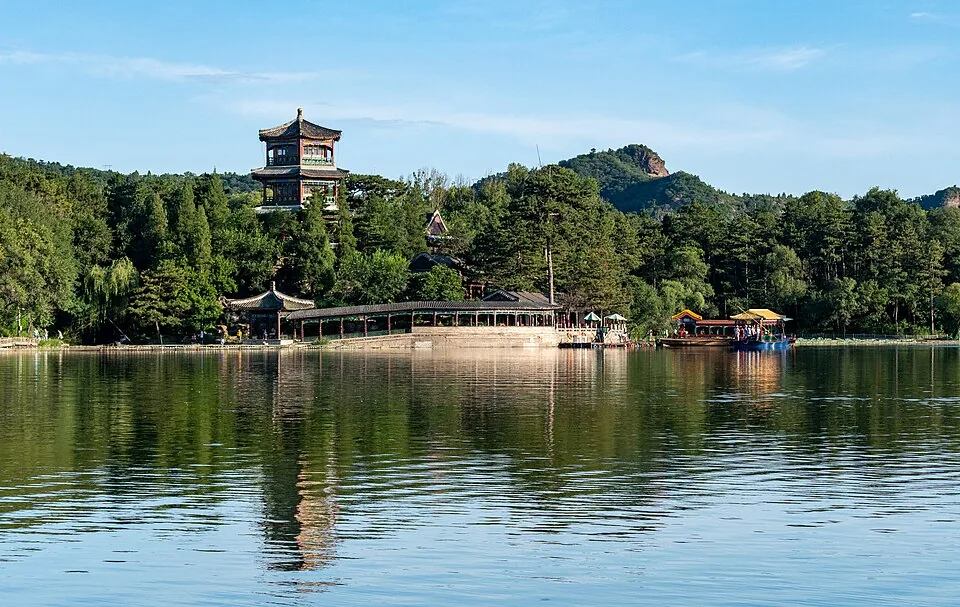
Chengde Mountain Resort and its outlying templesPhotograph · xiquinhosilva · CC BY 2.0 · Source Stop 1Chengde Mountain Resort and its outlying temples 承德避暑山庄和外八庙
Chengde Mountain Resort is a large complex of imperial palaces and gardens situated in the Shuangqiao District of Chengde in northeastern Hebei province, northern China, about 225 kilometres northeast of China's capital Beijing. This resort was frequently used as a summer vacation place before the Kuomintang Republic of China.
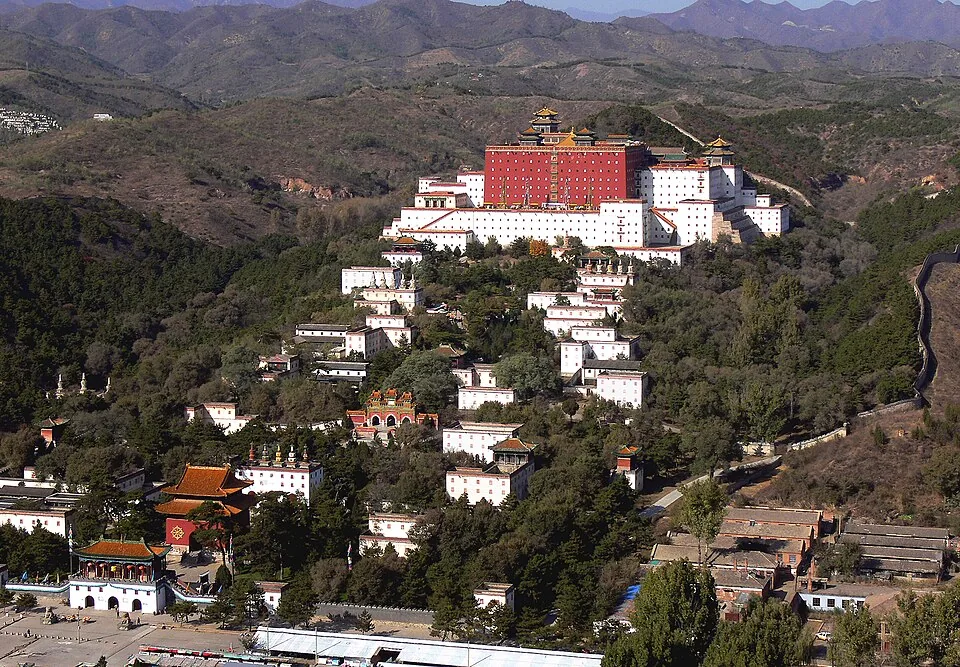
Putuo Zongcheng TemplePhotograph · Gisling · CC BY-SA 4.0 · Source Stop 2Putuo Zongcheng Temple 普陀宗乘之庙
The Putuo Zongcheng Temple of Chengde, Hebei, China is a Buddhist temple complex built between 1767 and 1771. It is located near the Chengde Mountain Resort, which is south of the Putuo Zongcheng.
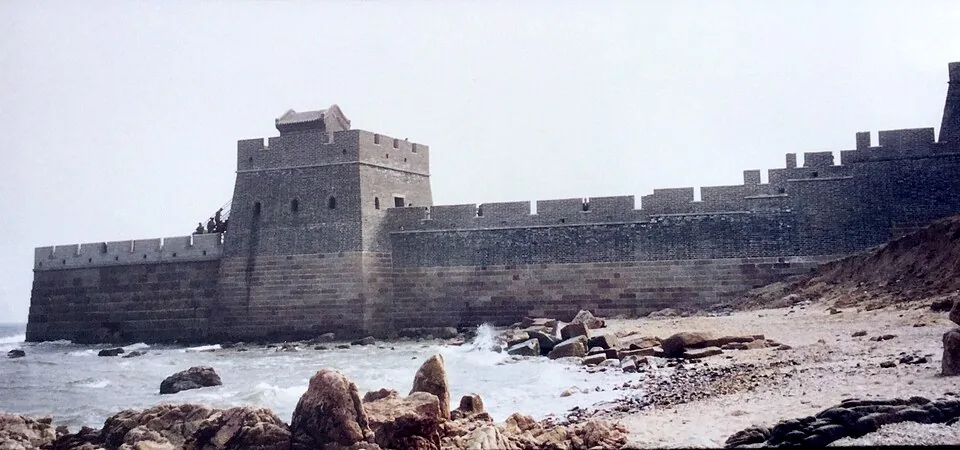
Shanhai PassPhotograph · Prince Roy · CC BY 2.0 · Source Stop 3Shanhai Pass 山海关
The Shanhai Pass is a major fortified gateway at the eastern end of the Great Wall of China and one of its most crucial fortifications, as the pass commands the narrowest choke point in the strategic Liaoxi Corridor, an elongated coastal plain between the Yan Mountains foothills and the Bohai Sea, which is the only easily traversable landway between North and Northeast China.
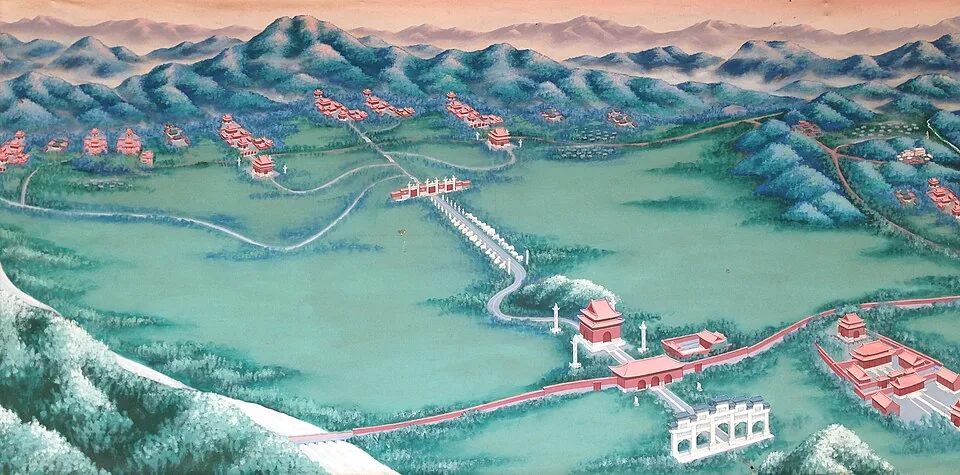
Eastern Qing tombsPhotograph · Bairuilong · CC BY-SA 4.0 · Source Stop 4Eastern Qing tombs 清东陵
The Eastern Qing tombs are an imperial mausoleum complex of the Qing dynasty located in Zunhua county of Tangshan in Hebei province, 125 kilometres northeast of Beijing. They are the largest, most complete, and best preserved extant mausoleum complex in China.
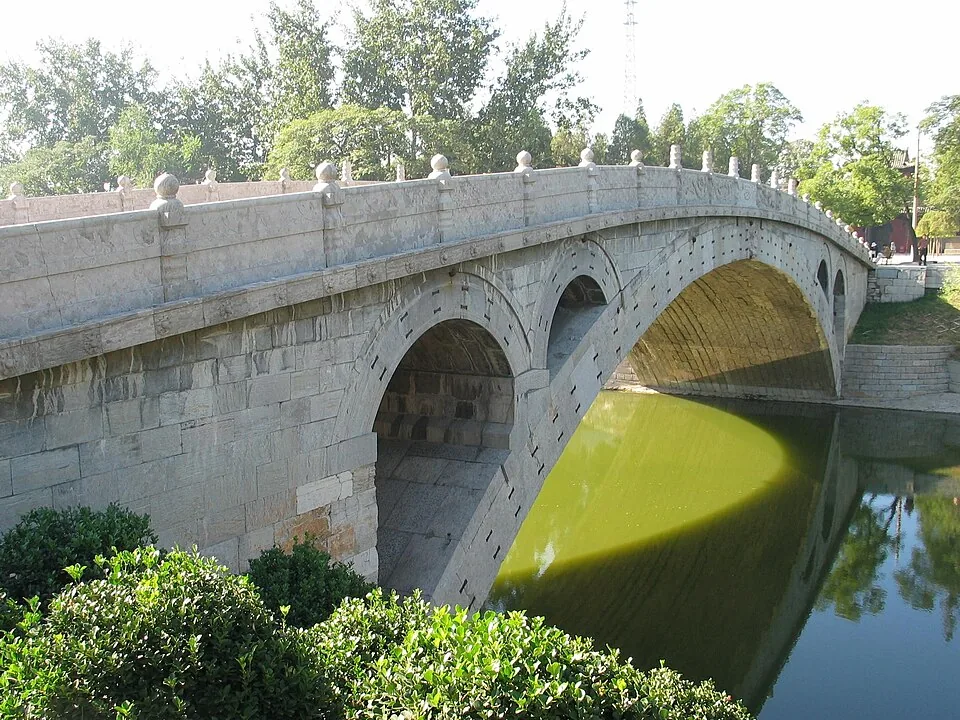
Zhaozhou BridgePhotograph · English Wikipedia user Zhao 1974 · Public domain · Source Stop 5Zhaozhou Bridge 赵州桥
The Anji Bridge, also known as the Great Stone Bridge or Zhaozhou Bridge, is the world's oldest open-spandrel segmental arch bridge of stone construction. Credited to the design of a craftsman named Li Chun, the bridge was constructed in the years 595–605 during the Sui dynasty.
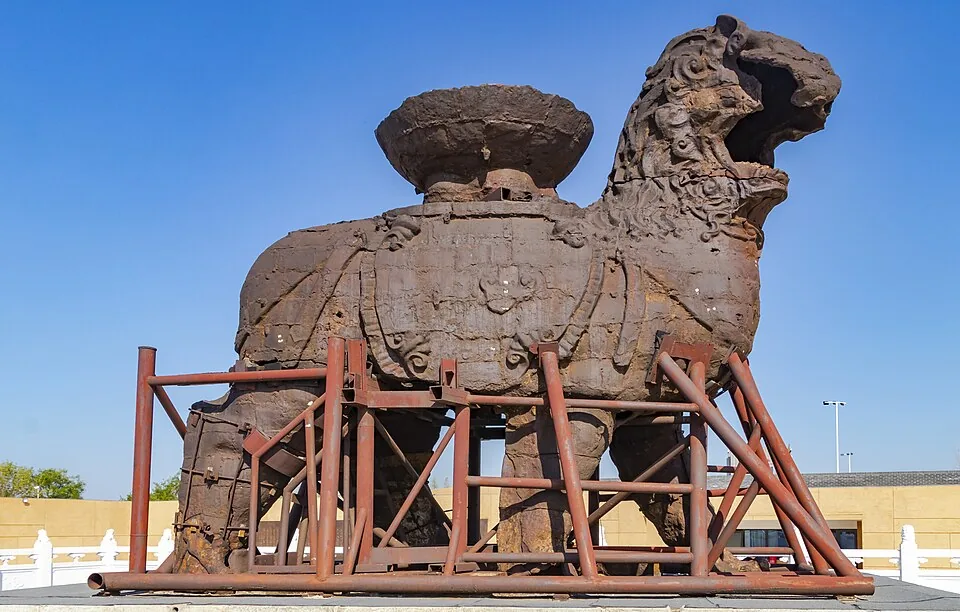
Iron Lion of CangzhouPhotograph · ScareCriterion12 · CC BY-SA 4.0 · Source Stop 6Iron Lion of Cangzhou 沧州铁狮子
The Iron Lion of Cangzhou, also known as the Sea-suppressing Howler, is a cast iron sculpture located in Cangzhou City, in Hebei Province, China, about 180 km southwest of Beijing. Cast in the Later Zhou dynasty in 953, the iron lion is the largest known and oldest surviving iron-cast artwork in China.
Planning
Transport
Plan transfers using current timetables and maps. Check access, the final approach and return options for each stop separately. The chapter order is editorial, not a confirmed travel schedule.
Climate
Weather varies by season and stop. Check the local forecast and alerts before setting out; for mountain sections, consider conditions at the relevant elevation. A photograph does not show current weather.
What to bring
Choose comfortable footwear and layers suited to the local forecast. Plan for rain, sun protection, phone power and access to documents. Confirm payment methods and entry requirements with each venue.
Buying tea
Before buying, confirm the origin, harvest year, processing, storage and price for a stated weight. Taste the tea where possible. Prices and availability change; the atlas does not endorse individual sellers.