The Great Tea Road · 17th to early 20th century
Great Tea Road
万里茶道China · Mongolia · Russia
The Great Tea Route linked China, Mongolia and Russia through overland trade. Atlas regions explore related cultural themes, not one exact caravan itinerary.
Who conducted the trade
Merchants · carriers · cross-border traders
What they carried
Tea · transport containers · trade documents
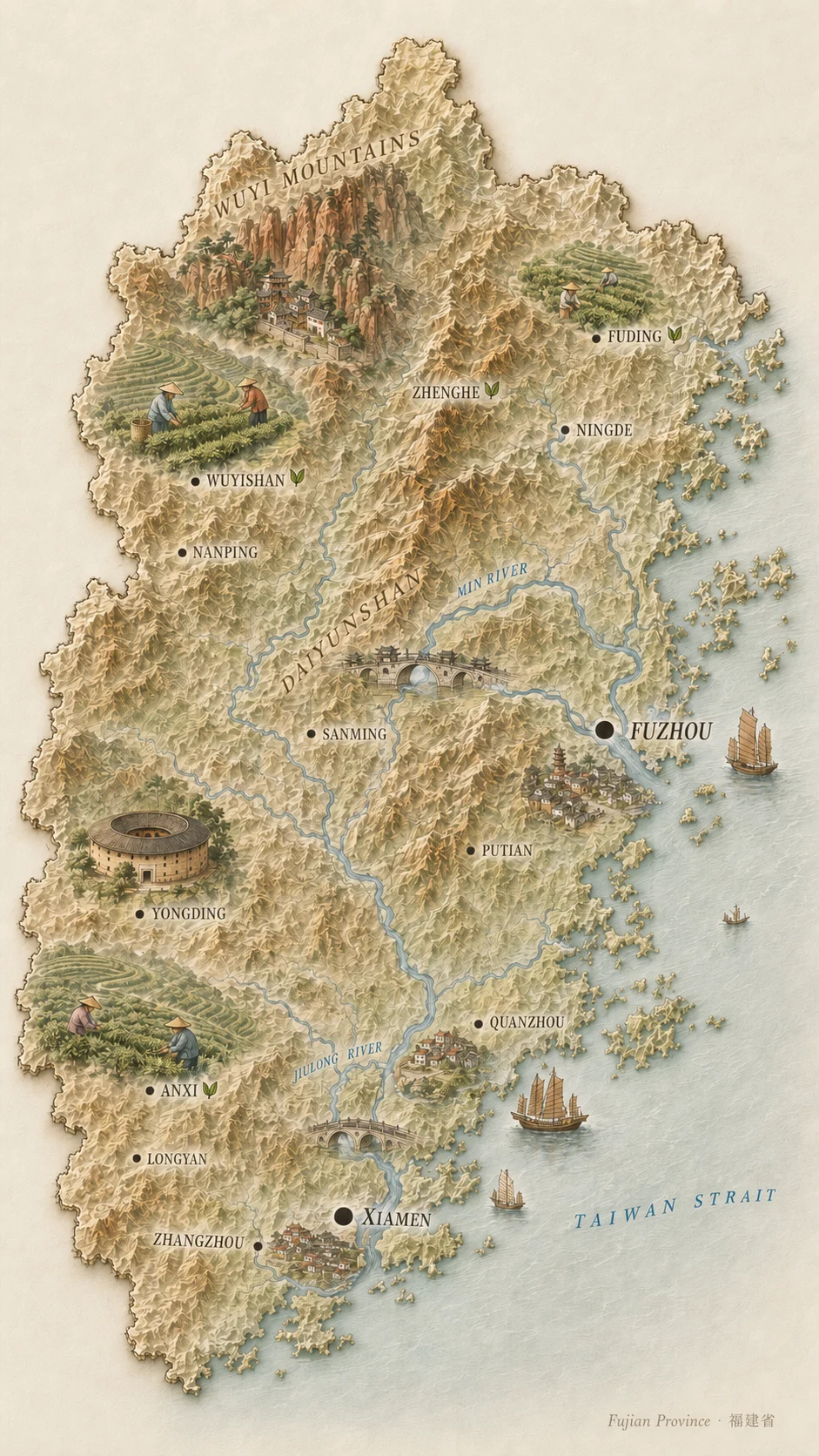
01 / 06 · 福建省
Fújiàn
Fujian brings together Wuyishan rock oolongs, white teas and Tieguanyin from Anxi. These traditions offer a comparison of oxidation, roasting and leaf-processing methods.
Explore the region ↗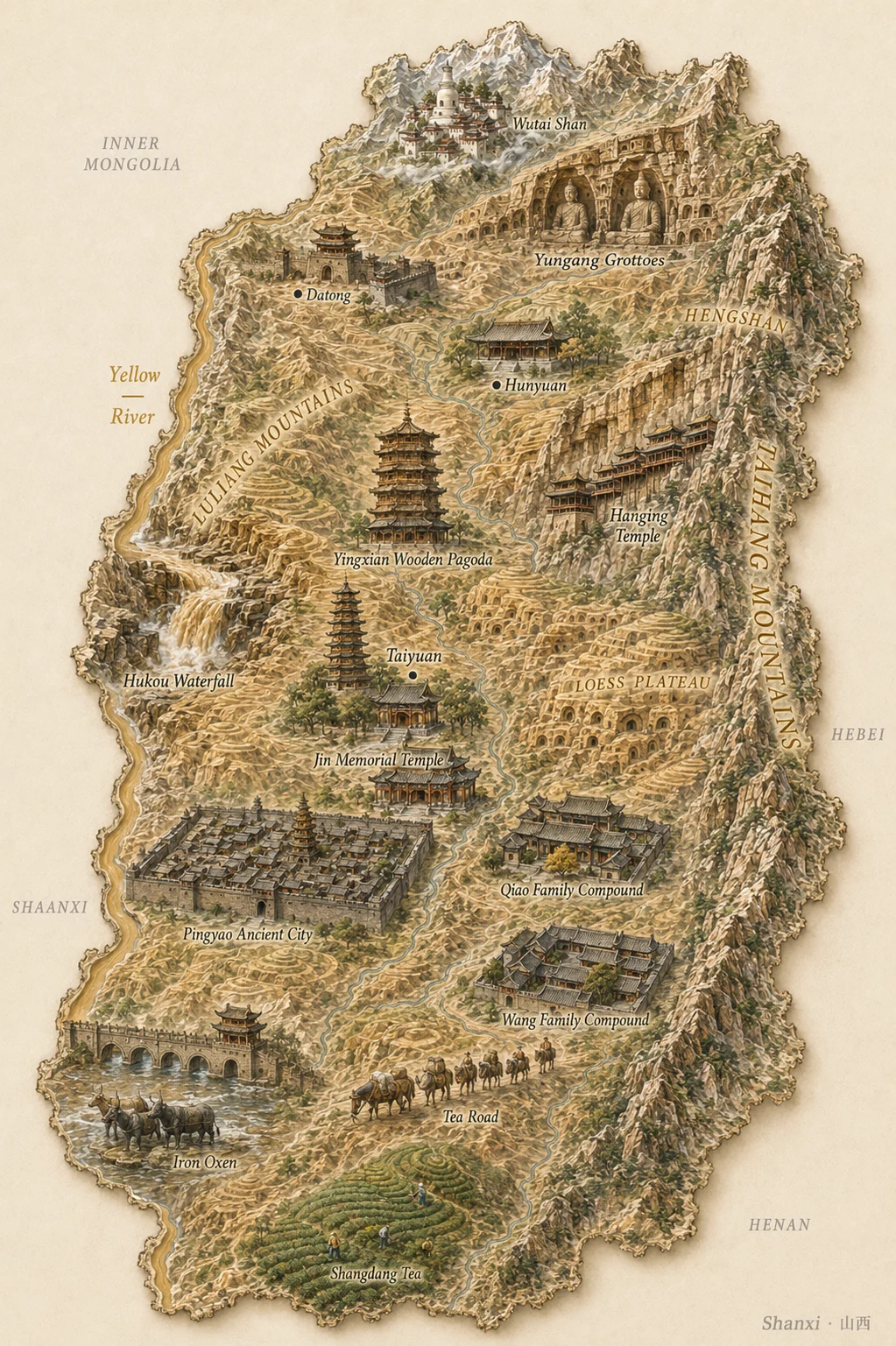
02 / 06 · 山西省
Shānxī
Shanxi explores tea trade through merchants and trading towns. Qingzhuan from Hubei is an example of tea traded by Shanxi merchants; a trading location should not be confused with a growing origin.
Explore the region ↗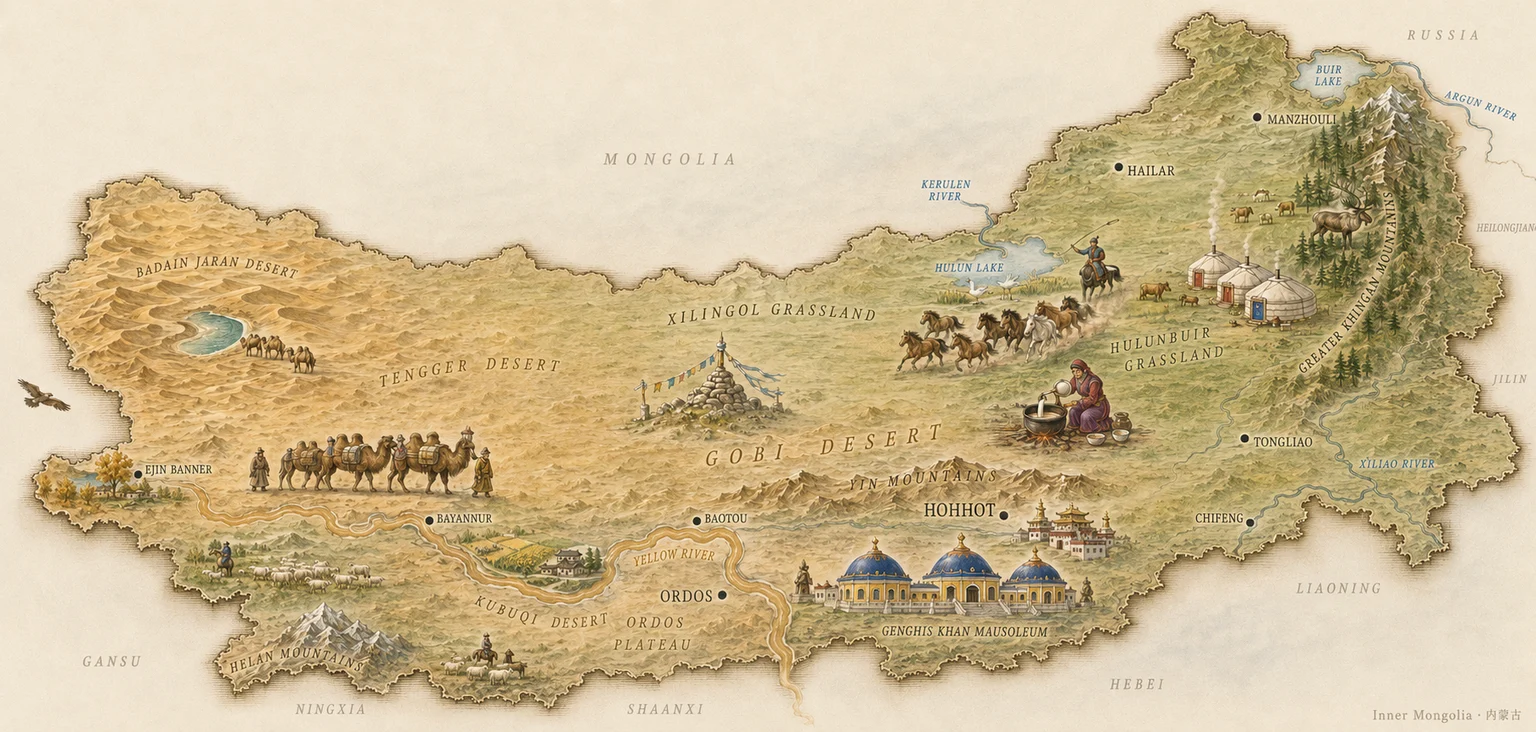
03 / 06 · 内蒙古自治区
Nèi Měnggǔ
Inner Mongolia is presented through milk-tea traditions and the circulation of pressed tea. Qingzhuan from Hubei offers a way to explore the relationship between tea production and drinking culture.
Explore the region ↗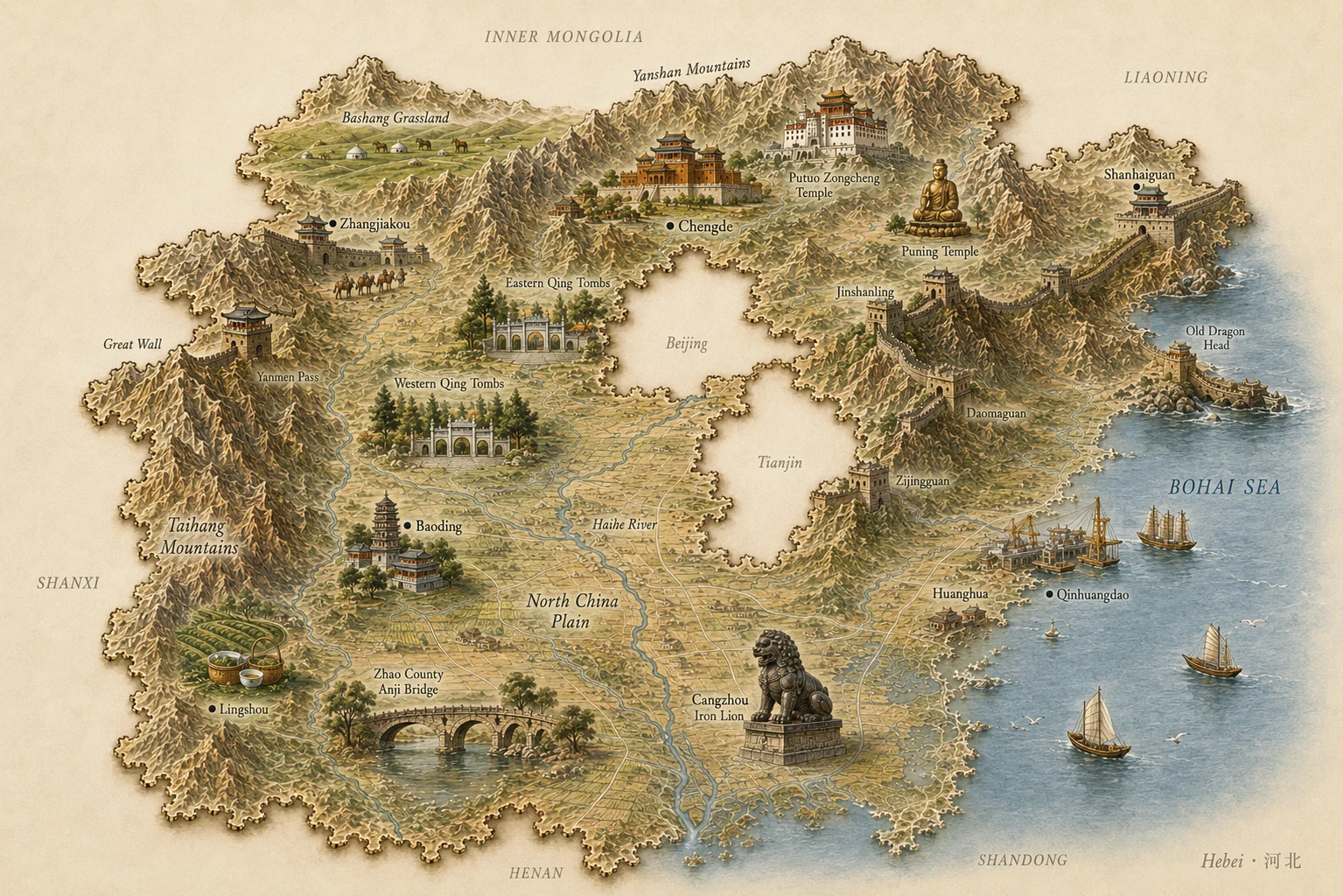
04 / 06 · 河北省
Héběi
Hebei is presented through cultural stops around Chengde and the Great Wall. Tea provides a theme for exploring exchange and court culture; it is not the name of a distinct local tea variety.
Explore the region ↗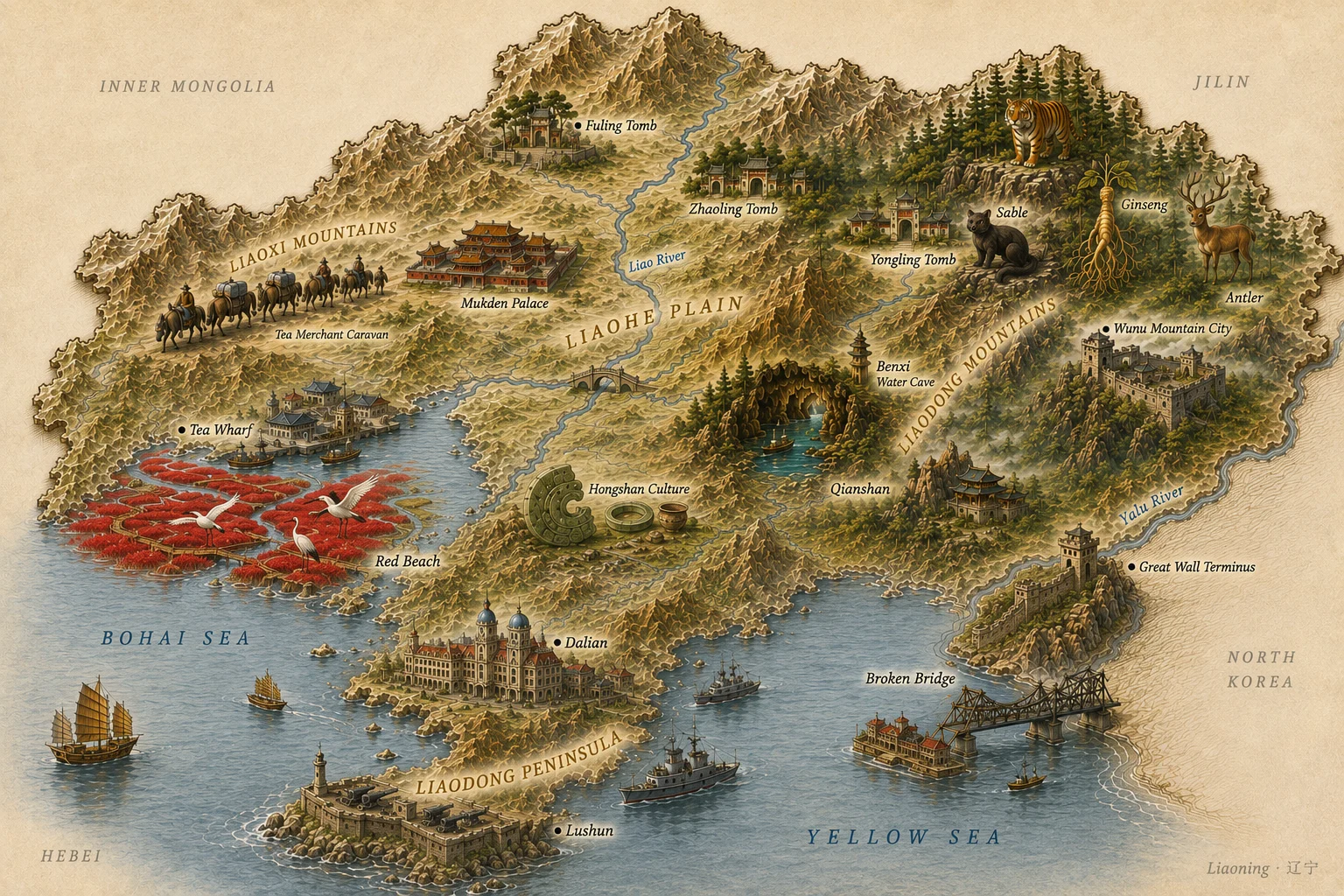
05 / 06 · 辽宁省
Liáoníng
Liaoning is presented through cultural heritage and tea-drinking traditions. Names associated with Manchu culture describe a context of use; the origin of the leaves and the drink’s recipe are separate questions.
Explore the region ↗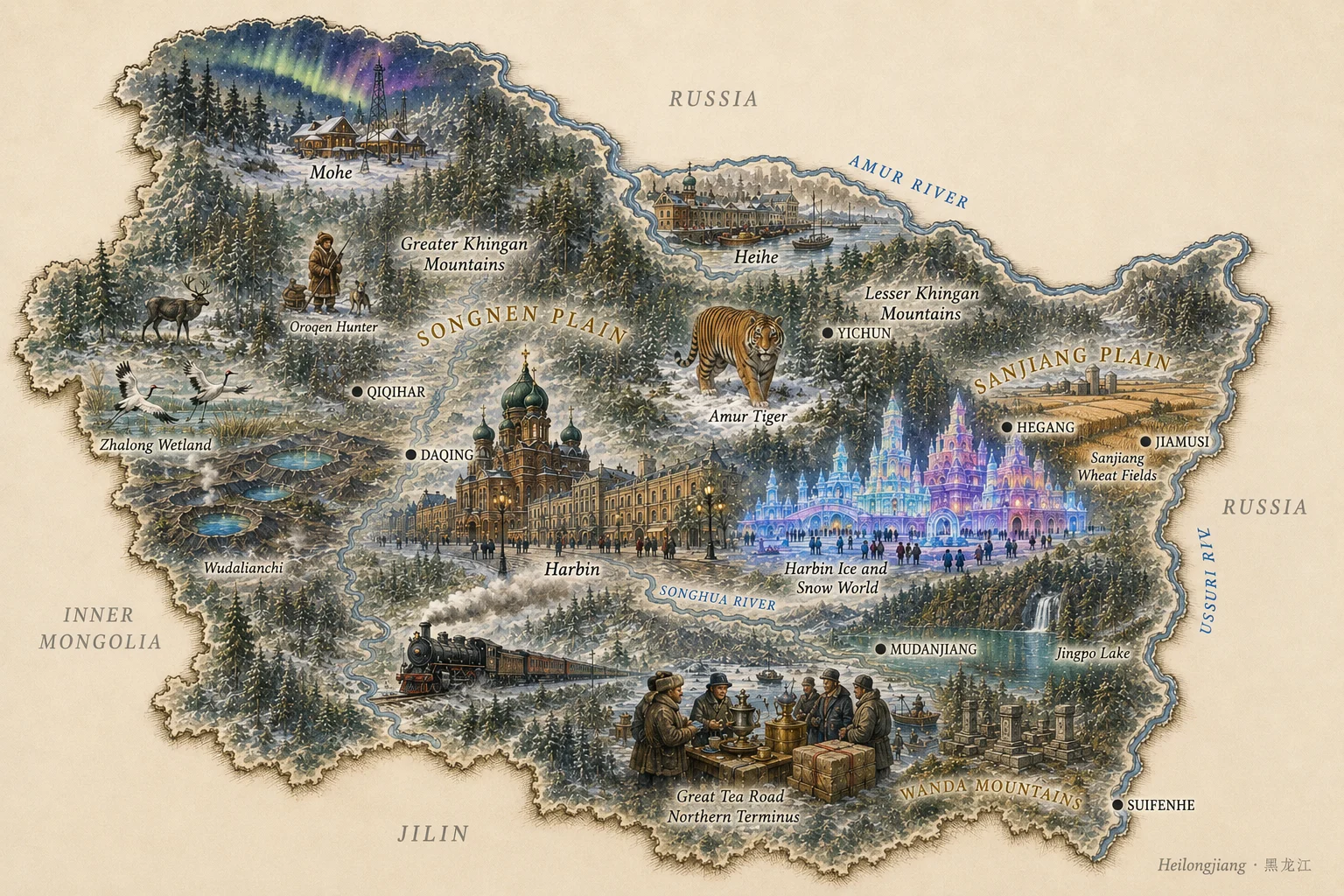
06 / 06 · 黑龙江省
Hēilóngjiāng
Heilongjiang is explored through Harbin and the theme of exchange between China and Russia. Tea cards connect this history with Hubei Qingzhuan trade without presenting it as a locally produced tea.
Explore the region ↗