The Great Tea Road · Trade connections continuing into the 20th century
Tea Horse Road
茶马古道Yunnan · Sichuan · Tibet
The Tea Horse Road was a trade network linking tea-producing Yunnan and Sichuan with Tibetan markets. Its branches cannot be reduced to one sequential route.
Who conducted the trade
Tea producers · merchants · caravan carriers
What they carried
Tea · transport containers · caravan equipment
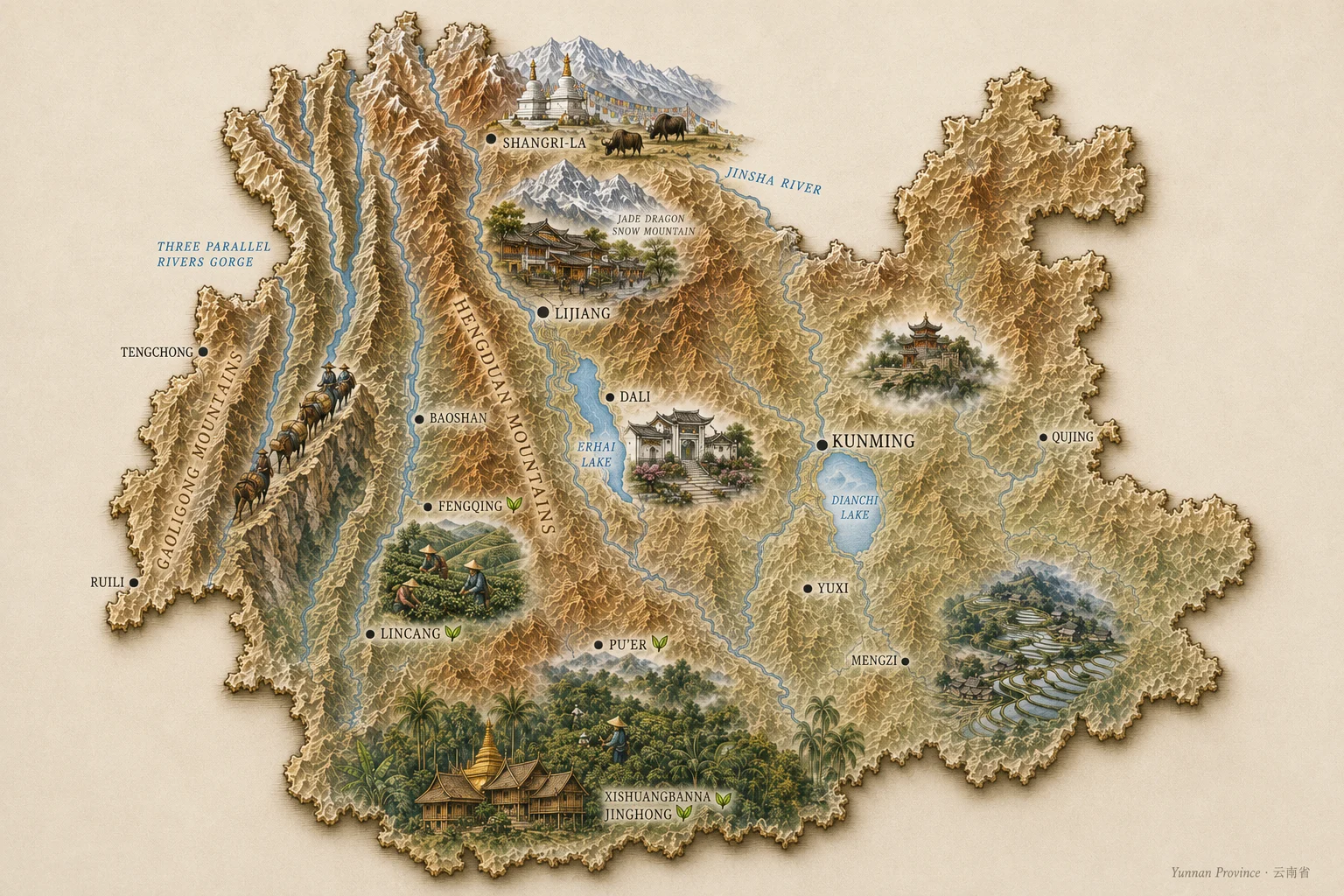
01 / 05 · 云南省
Yúnnán
Yunnan introduces sheng pu-erh, shu pu-erh and Dianhong black tea. The chapter connects the tea areas of Xishuangbanna, Pu’er and Lincang through their origins, processing methods and tea styles.
Explore the region ↗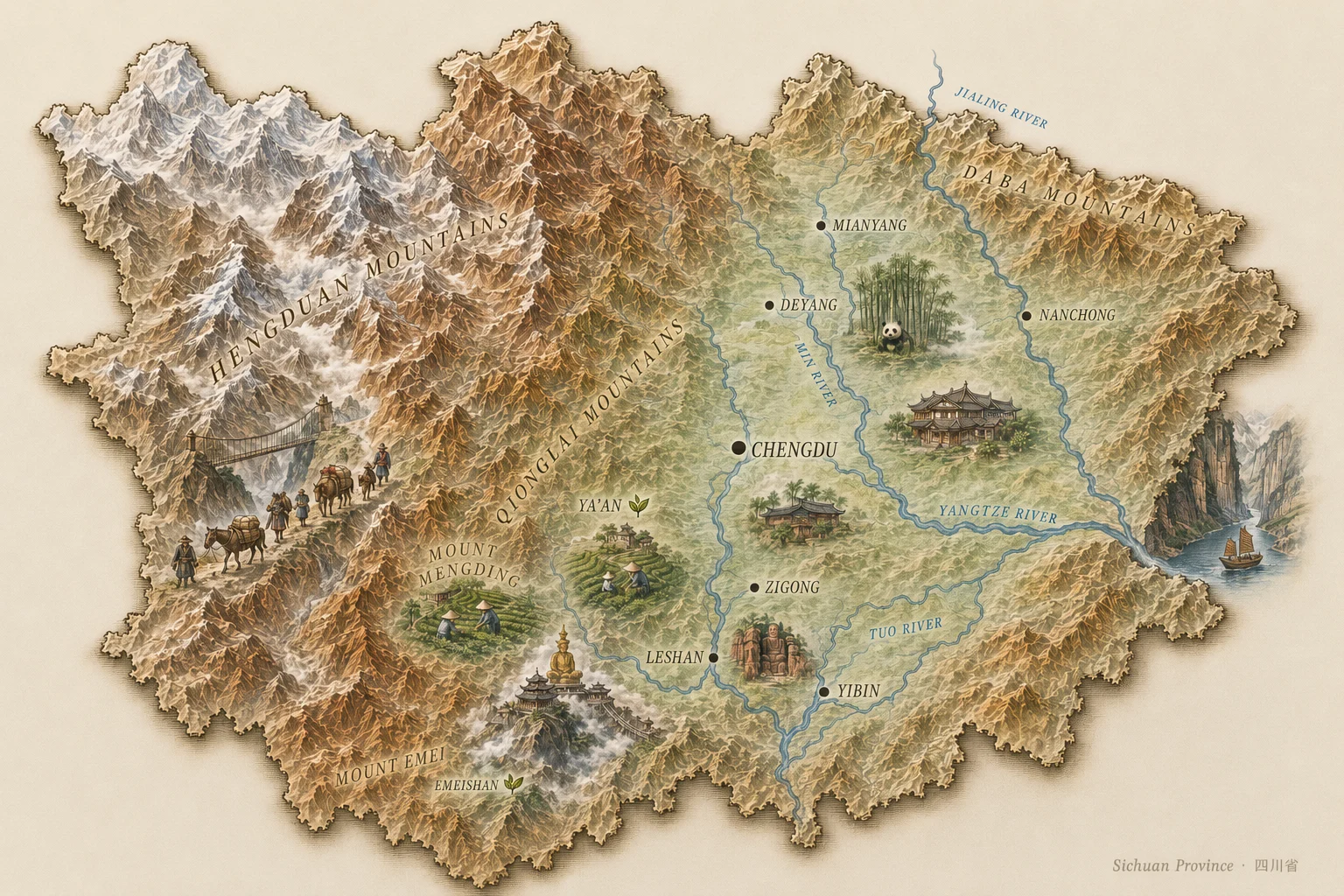
02 / 05 · 四川省
Sìchuān
Sichuan introduces green teas from Mengdingshan and Emeishan, black tea and Zangcha from Ya’an. Chengdu’s teahouses add traditions of brewing and conversation to the story of tea production.
Explore the region ↗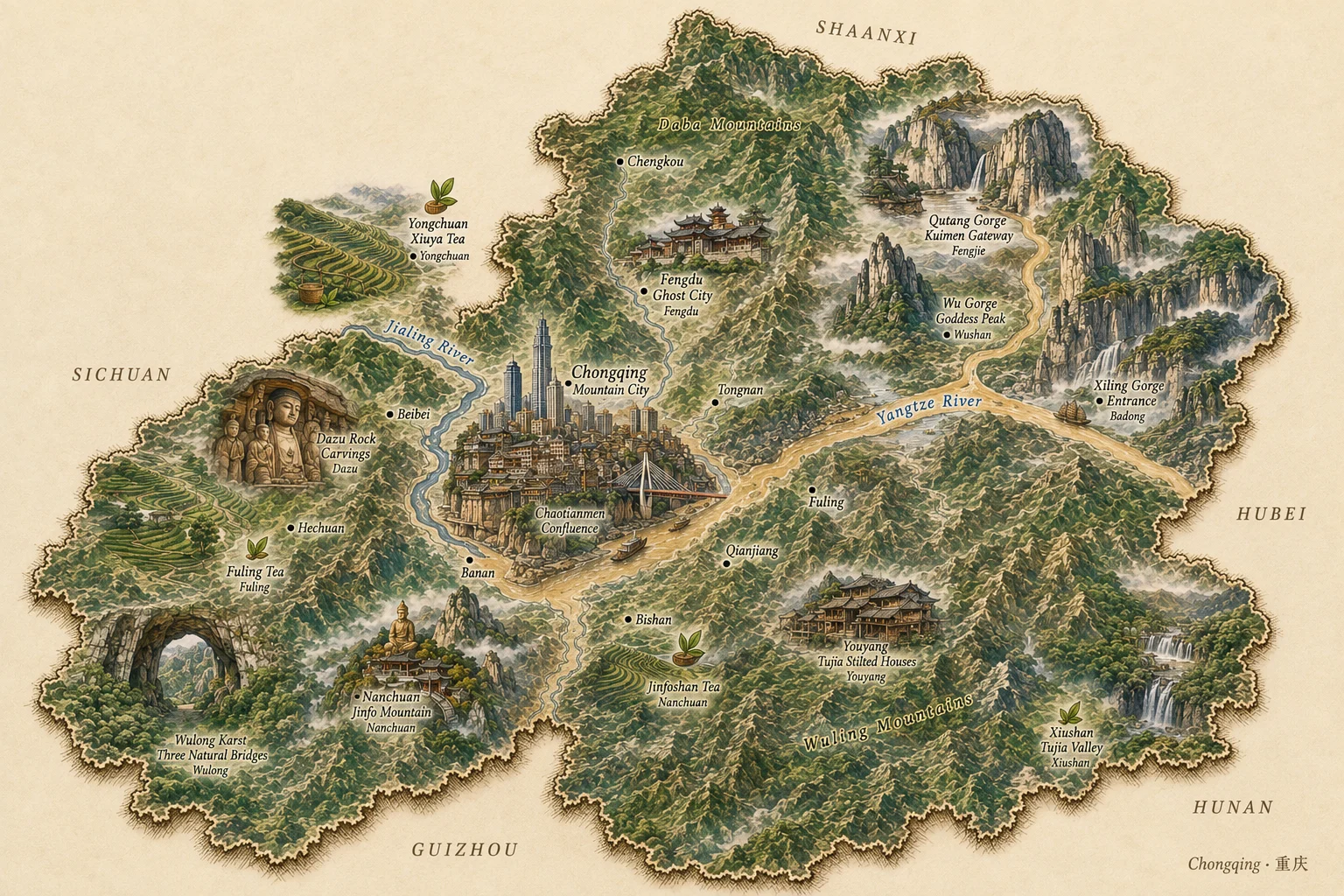
03 / 05 · 重庆市
Chóngqìng
Chongqing introduces urban tea culture in the southwest and serving tea in a gaiwan. A gaiwan is a vessel, not a tea variety; the leaf’s origin and processing remain important when choosing a tea.
Explore the region ↗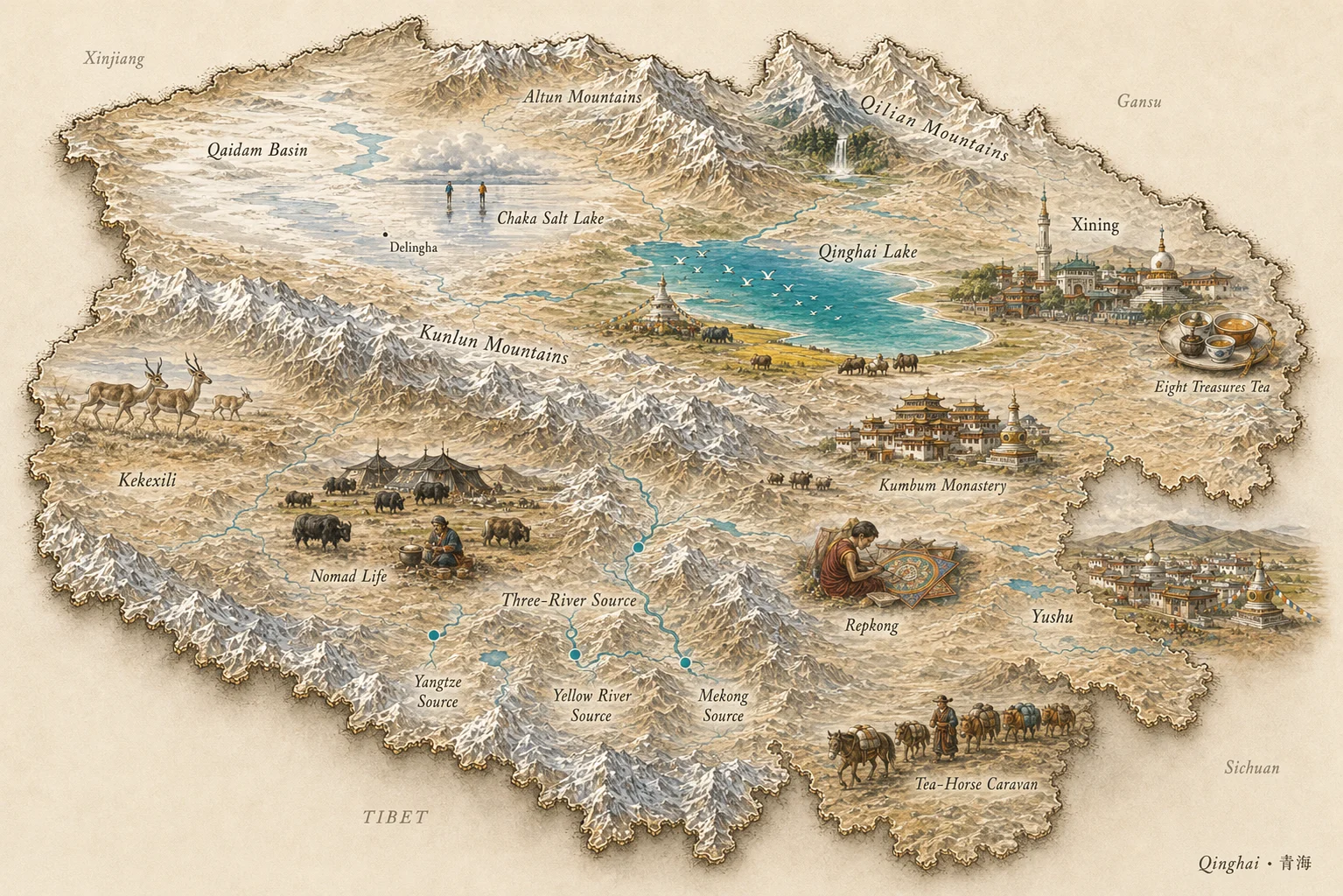
04 / 05 · 青海省
Qīnghǎi
Qinghai explores tea through drinks with butter and salt and through mixed Sanpaotai. The chapter connects drinking traditions with highland landscapes while distinguishing tea material from the finished drink’s ingredients.
Explore the region ↗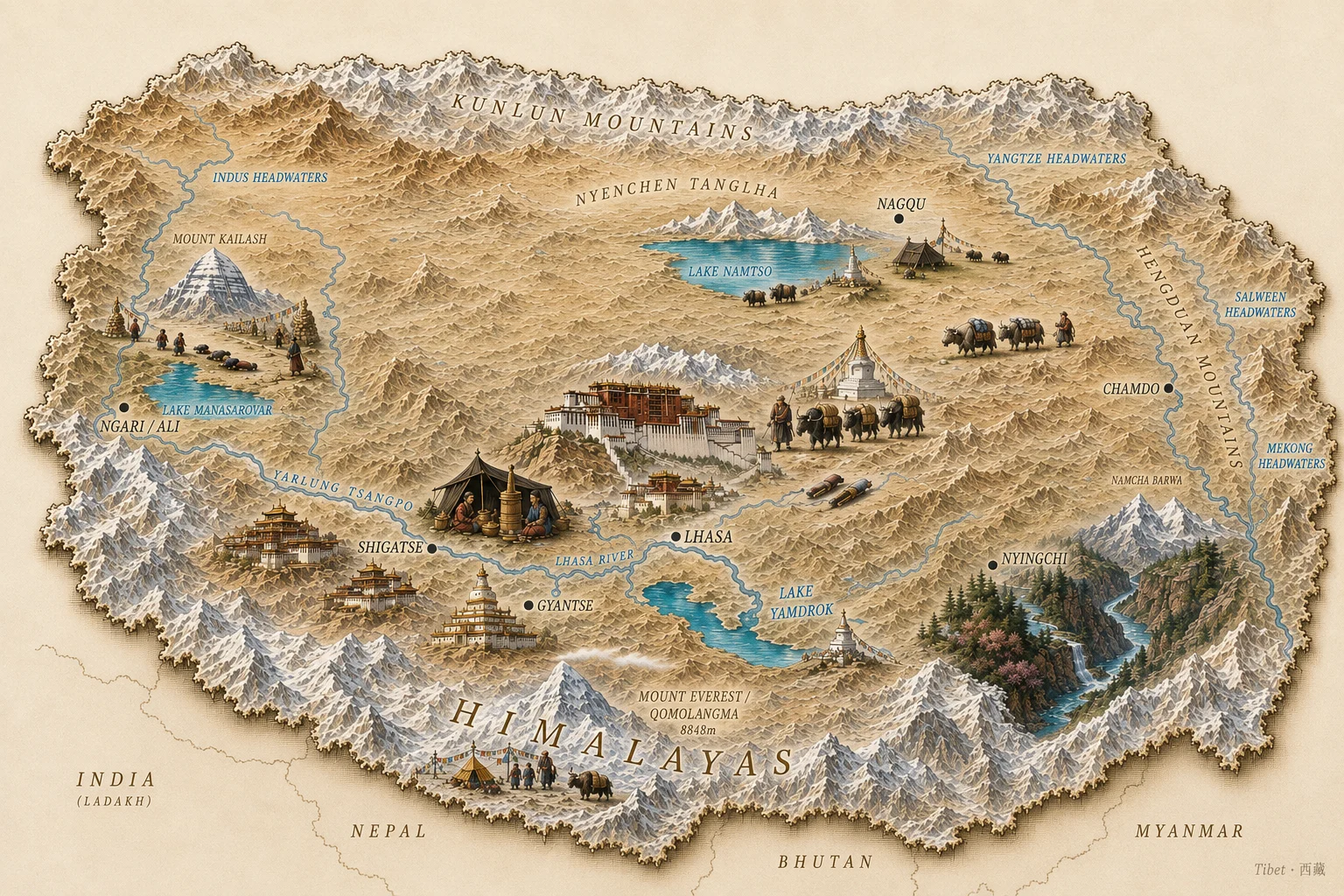
05 / 05 · 西藏自治区
Xīzàng
Tibet is connected with the history of tea-and-horse exchange and traditions of butter tea and sweet tea. The suggested sequence includes Lhasa, Yamdrok, Shigatse and the Rongbuk area. These are high-altitude places with specific access conditions; transport and permits require separate planning.
Explore the region ↗