Шэн-пуэр 生普洱
Natural fermentation, matures for years. Young: bitter, floral. 10+ years: sweet, camphoraceous. Gushu (古树) — from trees 100+ years old, special depth and 'qi'. Pressed into bingcha (饼茶) 357 g.
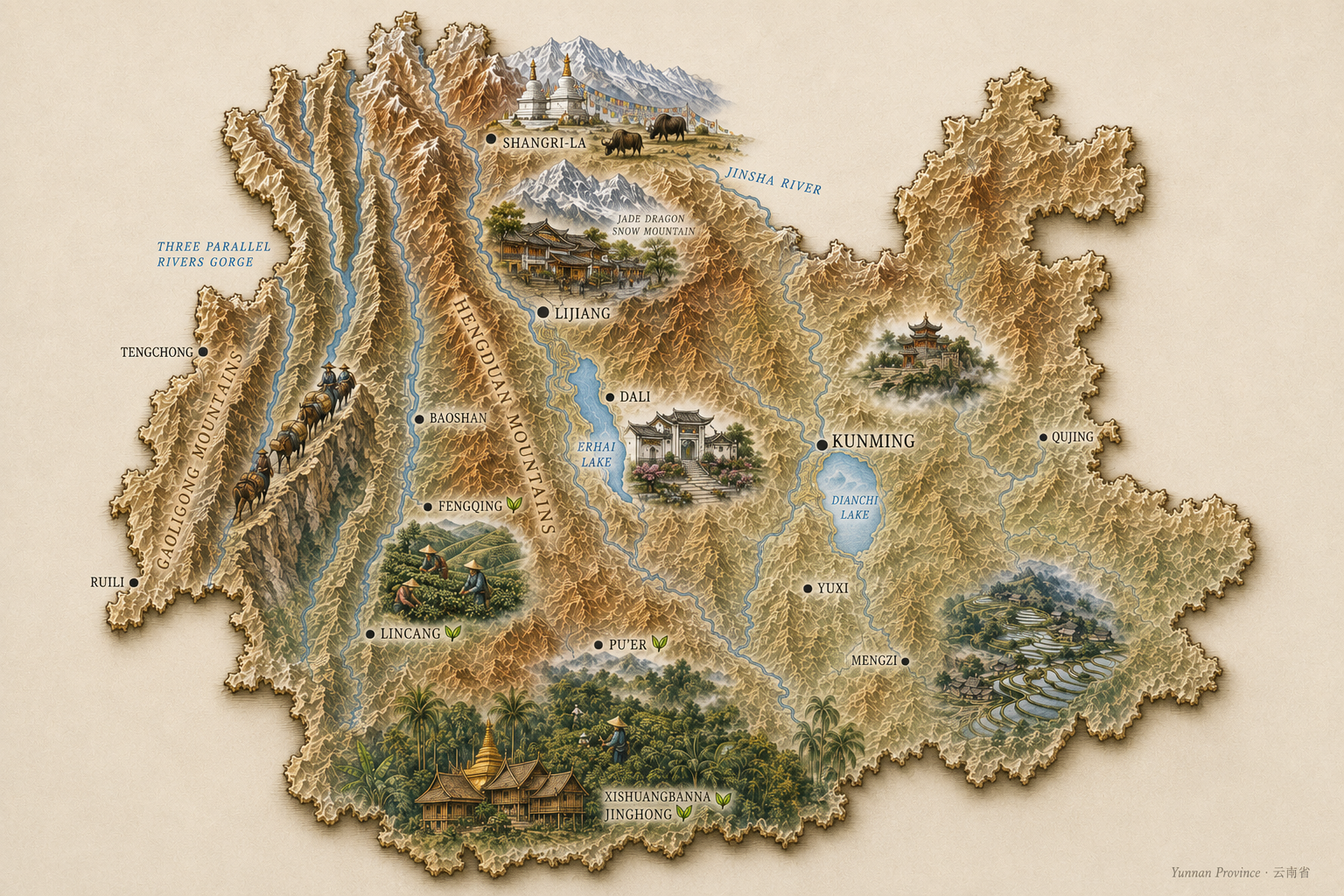
云南省 · Yúnnán
Each leaf holds the memory of a thousand years
普洱茶源
Yunnan is the cradle of the tea tree and the birthplace of pu-erh. Home to the world's oldest trees, Jingmai — UNESCO (2023). Route: tropical Xishuangbanna → legendary Laobanzhang → six great Yiwu mountains → Pu'er city → Jingmai → elite Bingdao → Dianhong Fengqing. From budget shu pu-erh to collectible gushu at 40,000+ yuan/kg.
Natural fermentation, matures for years. Young: bitter, floral. 10+ years: sweet, camphoraceous. Gushu (古树) — from trees 100+ years old, special depth and 'qi'. Pressed into bingcha (饼茶) 357 g.
Accelerated fermentation 'wodui' (渥堆), invented in 1973. Soft, earthy, chocolatey. Drinkable immediately. Cheaper than sheng pu-erh.
Black tea from Fengqing (1939). 'Golden tips' (金芽) — honey, caramel, malt. The ancient tree of Fengqing, 3200+ years old — the world's oldest cultivated tea tree.
Tropical Tea Capital
Capital of the Xishuangbanna Dai Autonomous Prefecture. Tropical Botanical Garden — 1000+ plant species. Night market: Dai cuisine, grilled bamboo, passion fruit juice. Introductory lecture on pu-erh: sheng vs shu, gushu vs taidi, pressing and aging.
Dai-style boutique hotel in Jinghong
Laobanzhang · Sheng Pu-erh
Bulangshan (布朗山) — the greatest tea mountain, 1600–2000 m. Laobanzhang (老班章) — 'King of Pu-erh', up to 10,000+ ¥/kg, powerful, bitter-sweet, long 'huigan'. Hekai (贺开) — 800-year-old trees, softer than Laobanzhang. Mengsong (勐宋) and Huazhu Liangzi — the highest point in Xishuangbanna. Pu-erh factory: withering → roasting → rolling → drying → pressing into bingcha.
Laobanzhang village — farmer's house among ancient trees
Six Great Tea Mountains
Six Great Mountains (古六大茶山): Yiwu, Mansa, Gedeng, Mangzhi, Manzhuan, Youle. Historical center of tea trade. Chama Gudao (茶马古道) — stone trails of caravans. Yiwu profile: soft, honeyed, floral. Old-growth forest 300+ years. Comparison: Bulangshan (powerful) vs Yiwu (delicate).
Yiwu guesthouse — village on the Tea Road
Tea Museum · Shu Pu-erh
The city that gave tea its name. Pu'er Tea Museum — 3000 years of history. Ning'er (宁洱) — start of the Chama Gudao, stone oath stele. Wodui technique (渥堆): moistened leaves ferment for 45–60 days → shu pu-erh. Tasting: young sheng vs 10-year sheng vs shu.
Tea Hotel Pu'er
Ancient Gardens UNESCO
Jingmaishan (景迈山) — UNESCO site (2023), trees 1000+ years old. The Bulang people — guardians of the tea forest. Morning mist over the tea forest — one of Yunnan's most beautiful sights. 'Orchid fragrance' (兰花香) — Jingmai's hallmark. Hand-picking and wok-roasting in the village.
Bulang village on Jingmaishan — among millennial trees
'Ice Island' · Elite Gushu
Bingdao (冰岛) — ~200 ancient trees, tea up to 40,000+ ¥/kg. 'Ice sugar sweetness' (冰糖韵) — unique 'huigan' in the throat. Homeland of the Mengku Daye variety (勐库大叶种) — the foundation of Yunnan pu-erhs. Family production in 5 villages: Bingdao Laozhai, Nanpo, Bawai, Hanzhai, Dixian.
Bingdao village — home of a tea-farming family
Dianhong Black Tea
Home of Dianhong Gongfu (1939). 'Golden tips' (金芽) — honey, caramel, malt. The ancient tree 3200+ years old — the world's oldest cultivated. Dianhong factory: withering → rolling → fermentation → drying. Final tasting: all teas of the route, from sheng pu-erh to dianhong.
Fengqing Tea House — red terraces