The Great Tea Road · 19th century: the tea-clipper era
Maritime tea route
海上茶路China · sea routes · Britain
Maritime trade carried Chinese tea to Britain. Nineteenth-century clippers competed to deliver fresh harvests early; individual voyages do not establish a universal journey time.
Who conducted the trade
Merchants · shipowners · captains and crews
What they carried
Tea in shipping chests · shipping and trade documents
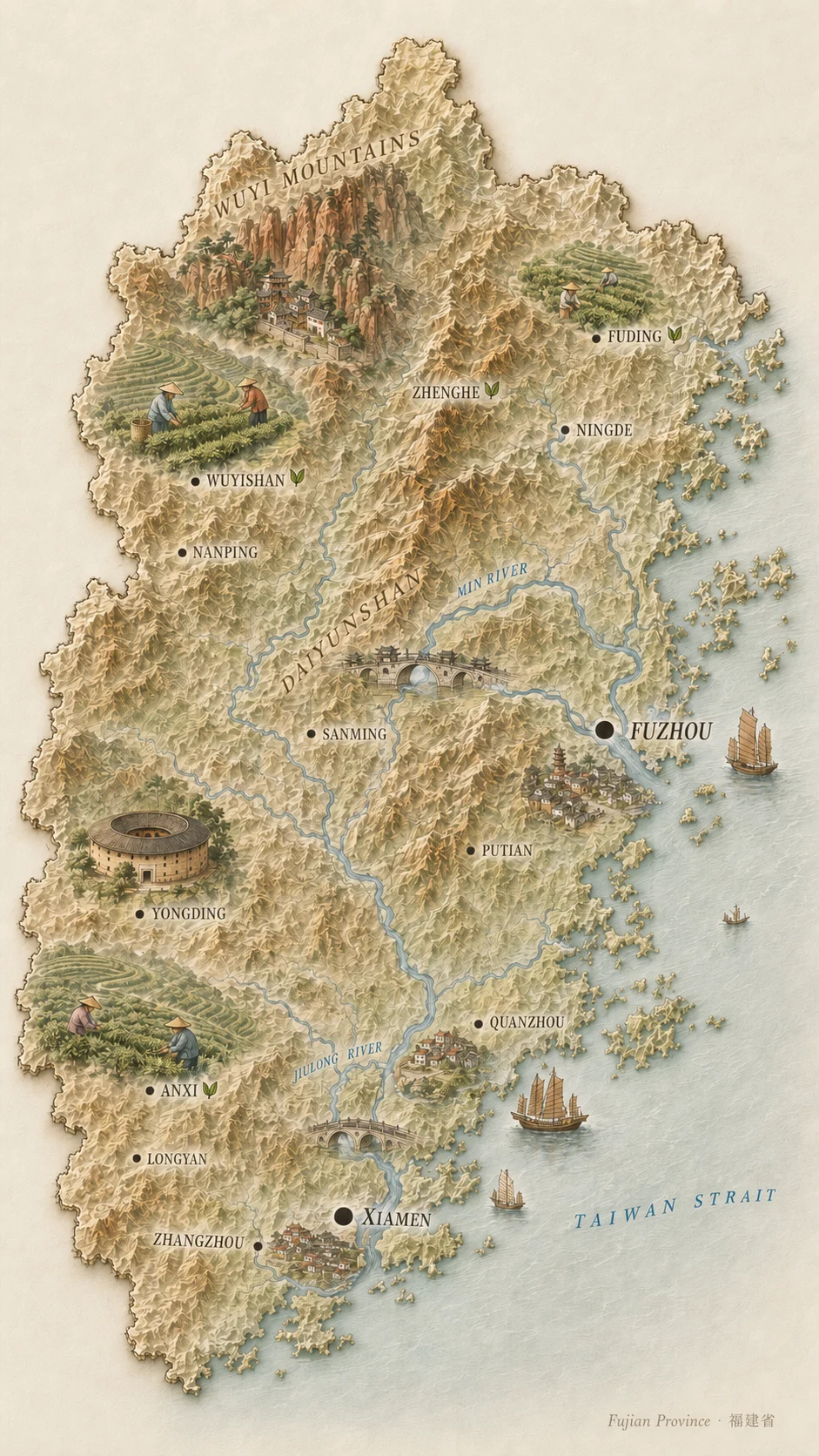
01 / 04 · 福建省
Fújiàn
Fujian brings together Wuyishan rock oolongs, white teas and Tieguanyin from Anxi. These traditions offer a comparison of oxidation, roasting and leaf-processing methods.
Explore the region ↗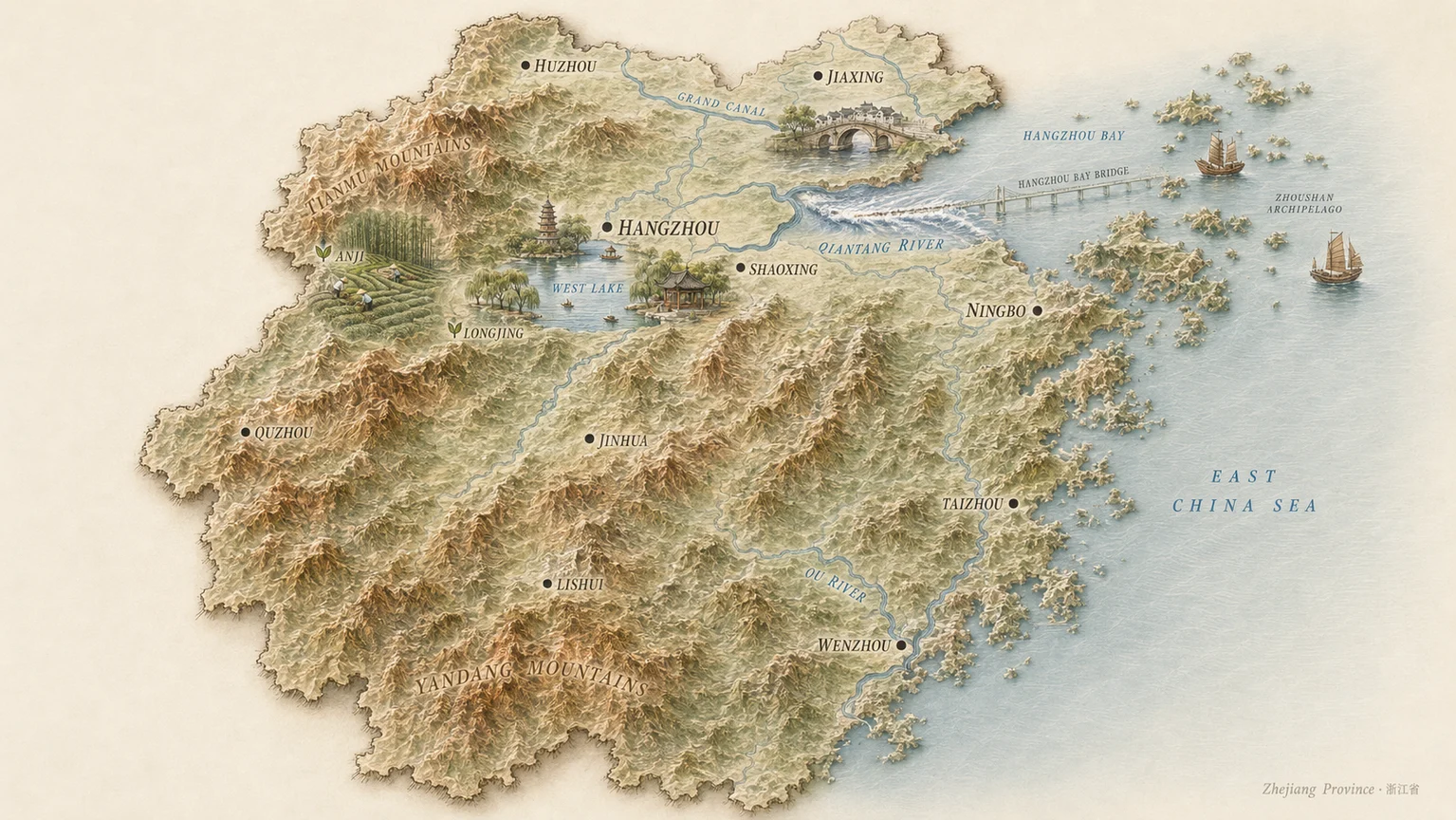
02 / 04 · 浙江省
Zhèjiāng
Zhejiang introduces Longjing from Hangzhou’s West Lake area, Anji Baicha and teas from Songyang. Despite “white” in its name, Anji Baicha is a green tea by processing method.
Explore the region ↗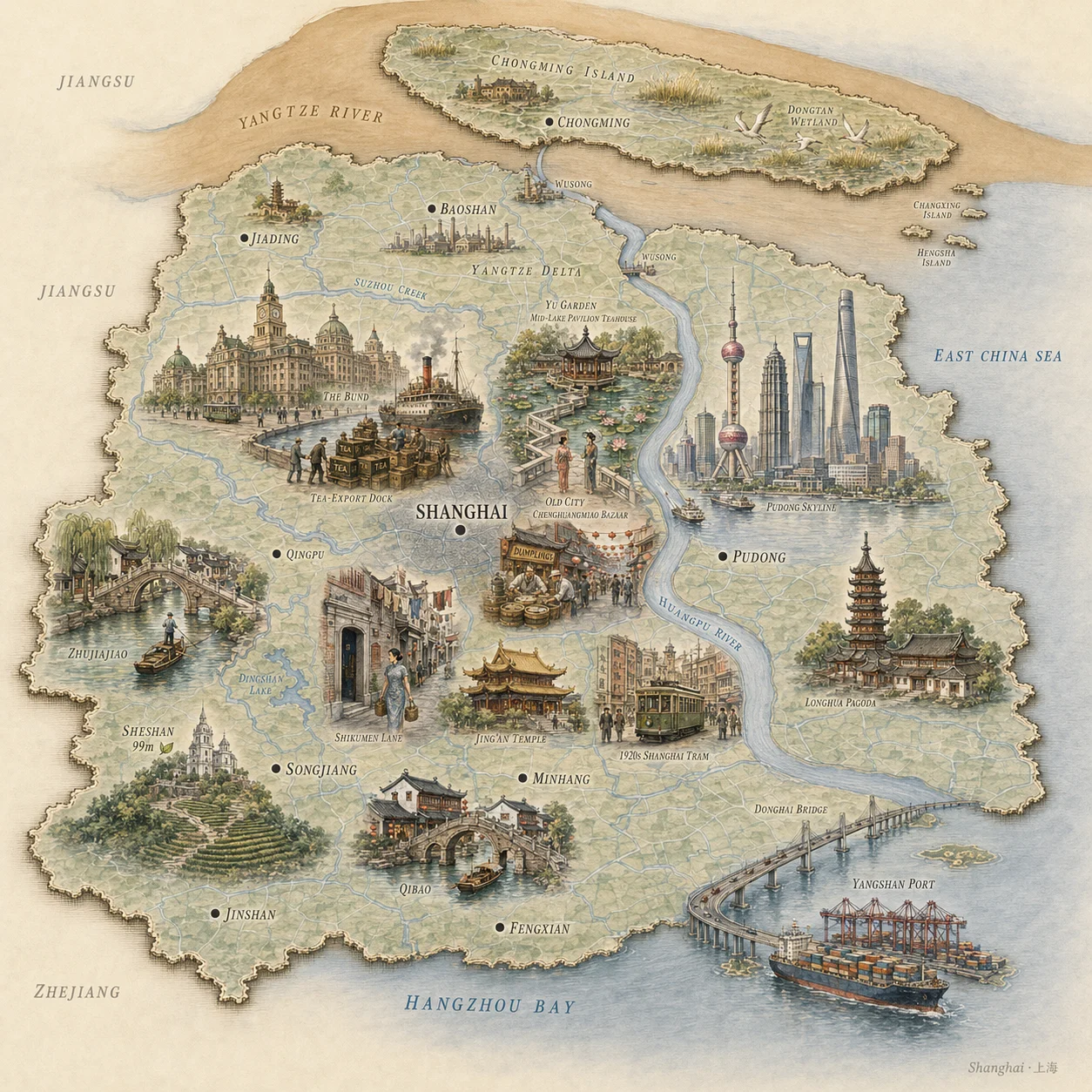
03 / 04 · 上海市
Shànghǎi
Shanghai connects the history of maritime trade with contemporary urban tea culture. The sequence includes the Bund, Yu Garden, Suzhou Creek, Wukang Road, Jiading and Pudong. Check specific exhibitions, tea houses and opening times when planning.
Explore the region ↗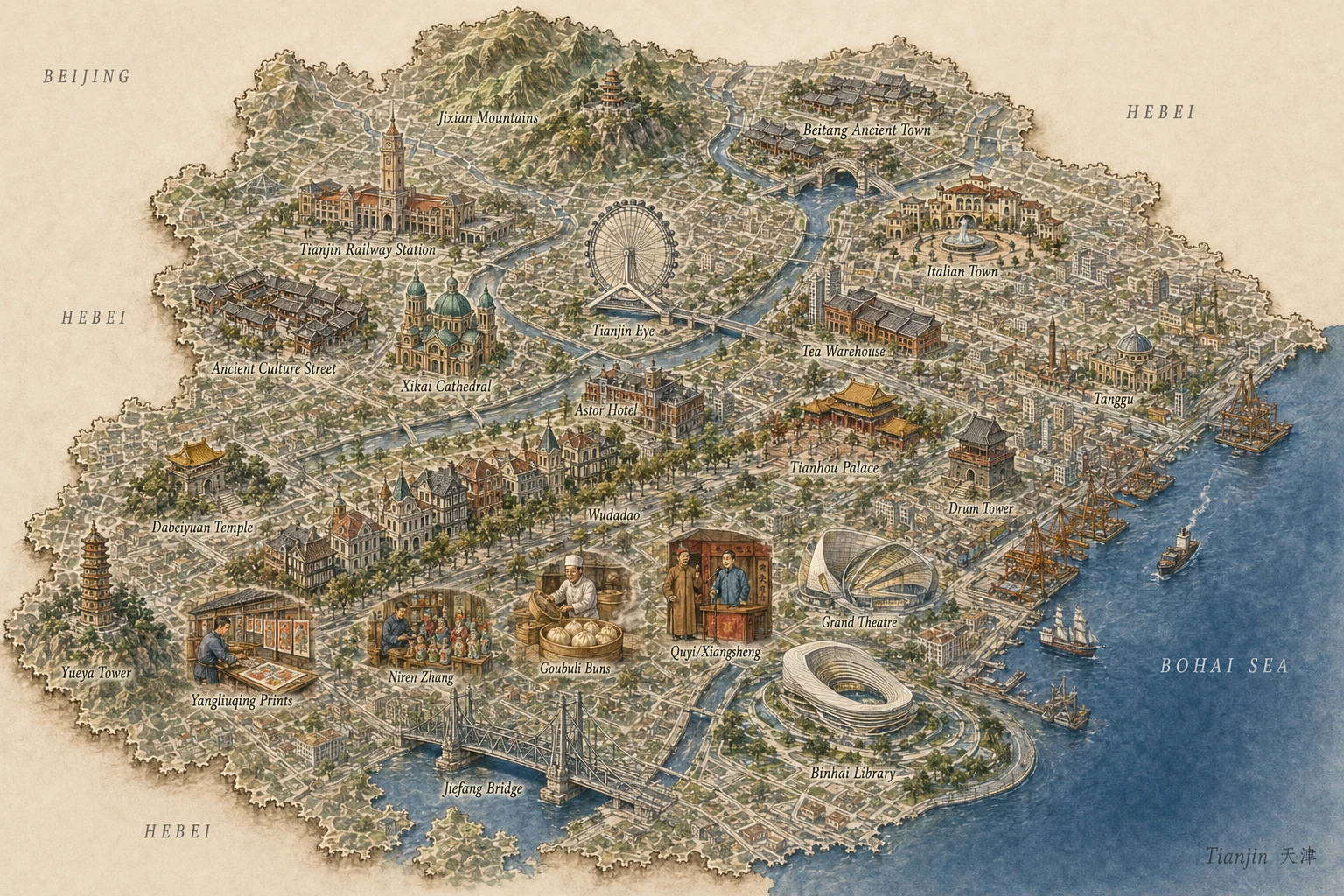
04 / 04 · 天津市
Tiānjīn
Tianjin is presented as a port city and a node of maritime connections. The route leads through Wudadao, the Italian-style quarter and the Haihe waterfront to temple and performance spaces. Choose specific tea houses, museums and events using current information rather than treating this editorial sequence as a booking programme.
Explore the region ↗