Жасминовый чай Пекина 茉莉花茶
The capital's hallmark. Green tea (often from Guangxi or Fujian) is scented with fresh jasmine over 7+ cycles. In Beijing — a symbol of hospitality. Served in glass gaiwans to observe the 'dance of the flower'.
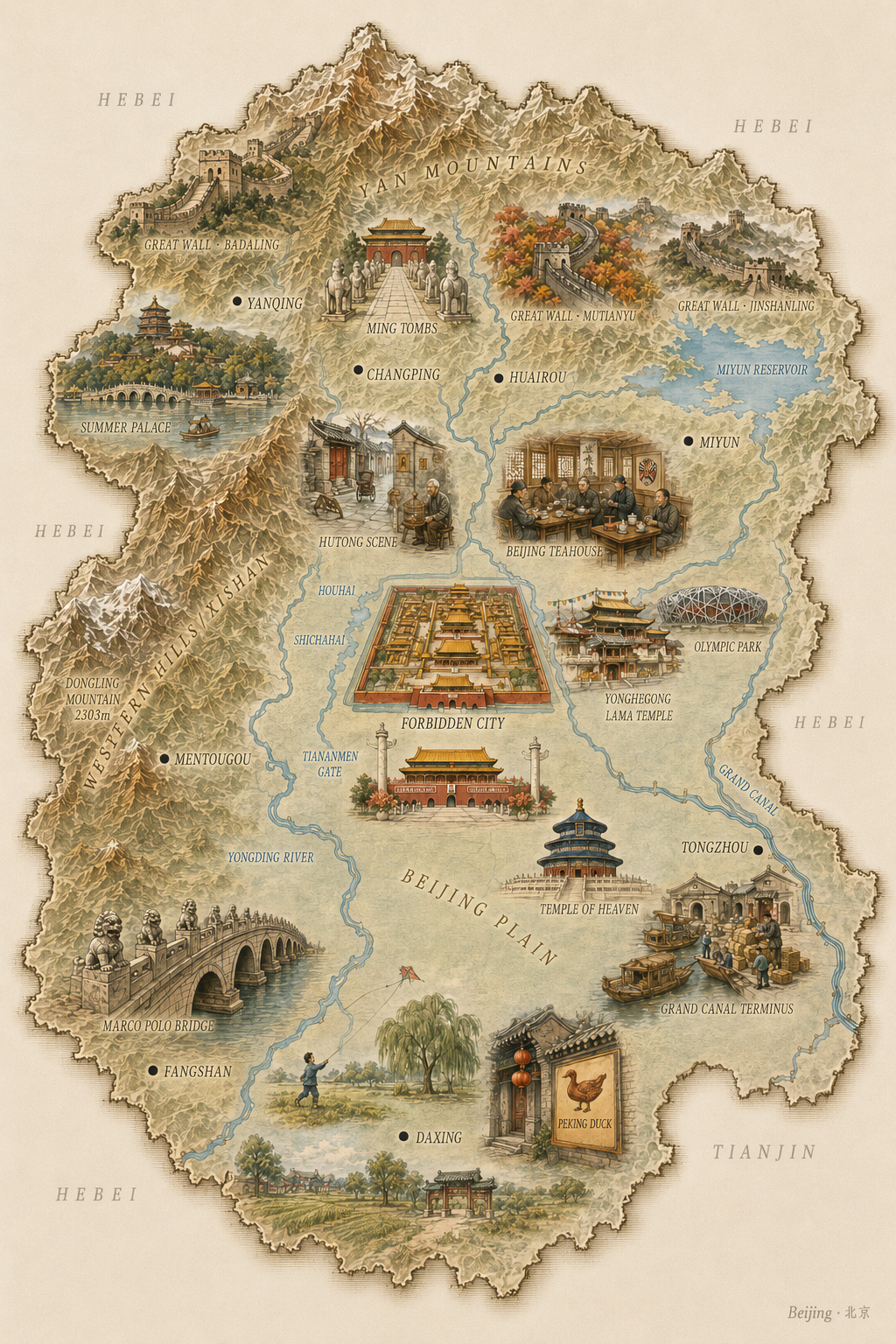
北京市 · Běijīng
Where the empire drank tea, ritual was born
京韵茶情
Beijing is the imperial capital where tribute teas from all provinces converged — from Wuyi Dahongpao to Xihu Longjing. Here, the tea ceremony became a court ritual, and jasmine tea (茉莉花茶) — the city's hallmark. Beijing's tea houses (老舍茶馆) were social hubs where Peking opera resounded and political deals were sealed. Route: Forbidden City → Lao She Tea House → Jasmine Maliandao → Great Wall at Mutianyu → Summer Palace, where the Empress's tea-drinking became art.
The capital's hallmark. Green tea (often from Guangxi or Fujian) is scented with fresh jasmine over 7+ cycles. In Beijing — a symbol of hospitality. Served in glass gaiwans to observe the 'dance of the flower'.
Tribute teas from all provinces — Shifeng Longjing, Anxi Tieguanyin, Wuyi Dahongpao — were gathered for the court. Highest quality, selection of first buds. Today the tradition continues in museums and elite tea houses.
Not tea, but culture: the Beijing tea house as a social institution. Opera, xiangsheng (comic dialogue), deals. Lao She wrote the play 'Tea House' in 1957 — a social history of China through one tea house.
Imperial Center · Gongcha
Forbidden City (故宫) — UNESCO, 980 buildings, 600 years of imperial history. The Tea Chamber of the Palace of Tranquil Longevity (寿康宫) — where Empress Cixi conducted ceremonies. Tiananmen, Beijing Tea Museum — exhibition of tribute teas from 24 provinces. Lao She Tea House (老舍茶馆) at Qianmen — evening Peking opera, xiangsheng, acrobatics, tasting of 8 teas.
Boutique hotel in a siheyuan (四合院) — traditional courtyard
Jasmine Epicenter
Maliandao (马连道) — China's largest tea market, over 3000 shops. Jasmine scenting — masterclasses: see how the green leaf absorbs the aroma of fresh flowers through 7 cycles. Comparing jasmines: Beijing (delicate) vs. Fuzhou (dense) vs. Guangxi (mass-market). Stocking up on tea for the year ahead.
Hotel near Maliandao — waking to the scent of jasmine
Wall · Tea on the Battlements
Great Wall at Mutianyu (慕田峪长城) — best-preserved section, UNESCO, without the Badaling crowds. Cable car ascent, toboggan descent. Tea picnic on a watchtower with a thermos of jasmine tea — a tradition of Chinese tourists. Tribute tea map: which caravans passed through which sections of the Wall.
Guesthouse by the Wall — sunrise over the battlements
The Empress's Tea Session
Summer Palace (颐和园) — UNESCO, residence of Cixi. Boat tea session on Kunming Lake (昆明湖) — reconstruction of an imperial ritual. Long Corridor (长廊) — 728 m with 14,000 painted scenes. Tingli Guan Tea House (听鸝馆) — here Cixi listened to Peking opera over a cup of Longjing.
Boutique hotel near the palace
Tea Courtyards of Old Beijing
Hutongs (胡同) of Shichahai — old alleyways, rickshaws, bicycles. Drum Tower (鼓楼) and Bell Tower — the emperor kept time. Tea courtyards hidden in the hutongs: family traditions of 3–4 generations. San He Lou Tea House (三和楼) — playing mahjong and drinking pu'er. Comparison: tourist tea houses vs. genuine hutong ones.
Siheyuan in a hutong — ancient charm
Sacrifice to Heaven · Finale
Temple of Heaven (天坛) — UNESCO, site of imperial sacrifices to Heaven for a good harvest. Echo Wall (回音壁), Hall of Prayer for Good Harvests (祈年殿). Morning tai chi practice by locals. Final tasting: jasmine, longjing, tieguanyin, dahongpao — four pillars of the tea empire. Shopping at Maliandao.